


ALTERNATIVES
How Mr Miyawaki Broke My Heart
What’s wrong with the popular Miyawaki method of ecological restoration?
Read More about How Mr Miyawaki Broke My Heart
ALTERNATIVES
What’s wrong with the popular Miyawaki method of ecological restoration?
Read More about How Mr Miyawaki Broke My Heart
ALTERNATIVES
After relinquishing control of forests to the villages that depend on them, forest cover in Nepal nearly doubled.
Read More about How Nepal Regenerated its Forests: Communities know their Forests Best
Bookshelf
From CBC Radio: Wind, rain, wildlife, and how they interact with the different sizes and shapes of leaves and branches all make up what David George Haskell calls the “distinct voices” of trees. His new book closely examines a dozen trees to show how they’re joined to the natural world, and to humanity as well….
Read More about The Songs of Trees: Stories From Nature’s Great Connectors
ALTERNATIVES
Mikhail Gorbachev, founder of Green Cross International, on the need for urgent economic and social change to promote true sustainable development that does not over-consume and waste natural resources, while at the same time ensures opportunities and peace for humanity. This 2012 interview with the former USSR President and Nobel-winner remains just as relevant today….
Read More about Mikhail Gorbachev: “We need a new economic model, the planet is overburdened”
CLIMATE CRISIS
From Vice.com: Just like an animal species, our languages evolved in the context of the environments that surrounded them. When we change those environments, we threaten much more than just the physical living things that thrive there. In the parts of the world where biodiversity is most at risk, words and phrases also face extinction….
Read More about As animals and plants go extinct, languages die off too
ECOCIDE/EXTINCTION
From The Atlantic: In the 18th century, European colonizers virtually eliminated the American bison. When we lose animals, we also lose everything those animals do. When insects decline, plants go unpollinated. When birds disappear, pests go uncontrolled and seeds stay put. When bison are exterminated, springtime changes in ways that we still don’t fully understand….
Read More about What America lost when it lost the bison
ECOCIDE/EXTINCTION
From The Guardian: A recent scientific study has found that 42% of fields in Britain surveyed by farmers were seriously deficient in earthworms; in some fields they were missing altogether. Particularly hard-hit were deep-burrowing worms, which are valuable in helping soil collect and store rainwater, but were absent from 16% of fields in the study. Jules…
Read More about It’s not just about the bees – earthworms need love, too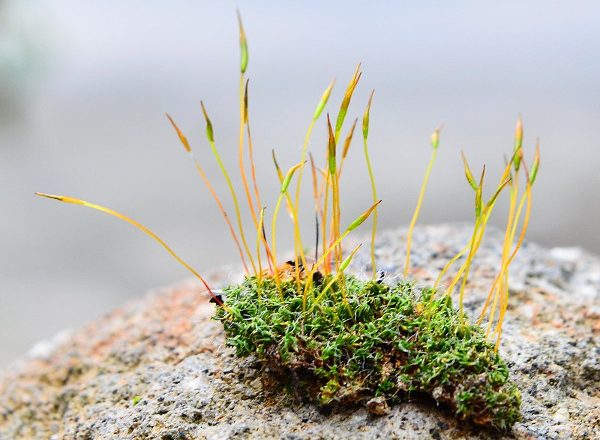
Bookshelf
From The New York Times: Scientist Monica Gagliano’s botanical research, which has broken boundaries in the field of plant behavior, indicate that plants are, to some extent, intelligent. Her experiments suggest that they can learn behaviors and remember them. Her work also suggests that plants can “hear” running water and even produce clicking noises, perhaps to communicate….
Read More about Thus Spoke the Plant: A Remarkable Journey of Groundbreaking Scientific Discoveries
Two botanists stumbled across this living kauri stump while on a walk in the woods
Sebastian Leuzinger/The Atlantic
Conserve/Resist
From The Atlantic: When Leuzinger saw the stump on a walk with fellow botanist Martin Bader, his head turned. He saw that even though it had no leaves, stems, or greenery of any kind, it did still contain living tissue—and when he knocked, it sounded different from deadwood. All appearances to the contrary, it’s still alive. But how?…
Read More about Super-organism, or the mystery of the undead kauri tree
ALTERNATIVES
The most disquieting thing wasn’t the disappearance of certain insect species; it was the deeper worry that a whole insect world might be quietly going missing, a loss of abundance that could alter the planet in unknowable ways. “We notice the losses,” says David Wagner. “It’s the diminishment that we don’t see.” (New York Times)…
Read More about The Insect Apocalypse: What does it mean for the rest of life on Earth?
ALTERNATIVES
Here is the ambitious (and controversial) proposal by E.O. Wilson —arguably the world’s most lauded living evolutionary biologist— to save life on Earth by setting aside around half the planet in various types of nature reserves. Also included is a research paper exploring the viability of Wilson’s proposal, along with a sharp critique of it….
Read More about Half-Earth: A biologist’s manifesto for preserving life on Earth
A temple and a small pond at the origin of Nanduwali
ALTERNATIVES
Nanduwali in east Rajasthan started flowing again when the villagers decided to work with nature and not against it. There was a time when they believed that crops grow only with rainfall -lacking knowledge about the underground movement of water and how it can be enhanced. Today, the revived river is a lifeline to them….
Read More about Nanduwali: A river comes to people
ALTERNATIVES
José Mujica was the President of Uruguay between 2010 and 2015 and was a former urban guerrilla fighter who was imprisoned for 13 years during the military dictatorship in the 1970s and 1980s. Often referred to as the “world’s most humble president”, he retired from office in 2015 with an approval rating of 70 percent….
Read More about We have invented a mountain of superflous needs, says ‘the world’s poorest president’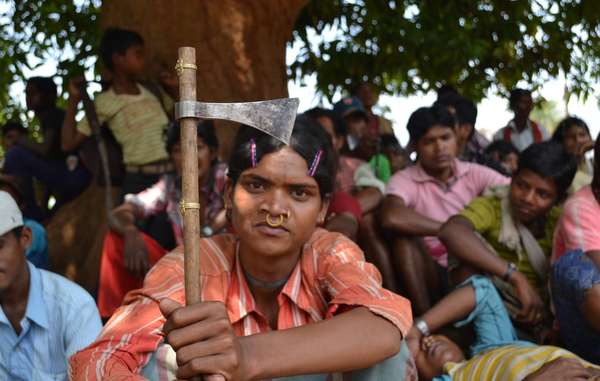
Representative pic
ALTERNATIVES
Tribals make up 26% of Jharkhand’s population. Recently, many Adivasi villages in Jharkhand have put up giant plaques declaring their gram sabha as the only sovereign authority and banning ‘outsiders’ from their area. The Hindu reports on a political movement that is gathering steam across the State’s tribal belt, originally inspired by the PESA Act….
Read More about The Pathalgadi rebellion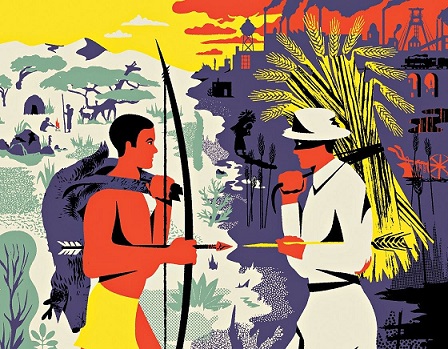
Culture/Cognition
From The Conversation: Are Indigenous and Western systems of knowledge categorically antithetical? Or do they offer multiple points of entry into knowledge of the world? As ways of knowing, both systems share important and fundamental attributes. There are also many cases where science and history are catching up with what Indigenous peoples have long known….
Read More about Western science is finally catching up with Traditional Knowledge
ALTERNATIVES
From The Guardian: This indigenous Purépecha town was dominated by illegal loggers, who clearcut local forests with the protection of a drug cartel, and the collusion of corrupt police and politicians. Eventually, the townspeople decided they had enough. In April 2011, local residents ran off the loggers, kicked out the mayor and banished political parties. David…
Read More about Cherán, Mexico: The town that said ‘No’
ALTERNATIVES
Brazil, Colombia and Mexico top the list of countries where the most people die defending a patch of earth, a mountain, or a river. The region where most environmental activists die annually is taking action with a new landmark agreement. The “Escazu Accord” is only the second regional agreement on environmentalists’ rights in the world….
Read More about Latin America signs landmark agreement to protect environmental activists
Saravanakumar/Icon Films Ltd.
Conserve/Resist
A tribute to Romulus Whitaker, recently awarded the Padma Shri, among India’s highest civilian honours. Here, the acclaimed herpetologist talks about his decades of work with reptiles which led to setting up of six pioneering institutions including the famous Madras Crocodile Bank, apart from giving snakes and reptiles a positive place in the Indian public’s mind….
Read More about A tribute to Romulus Whitaker, the ‘Snake man of India’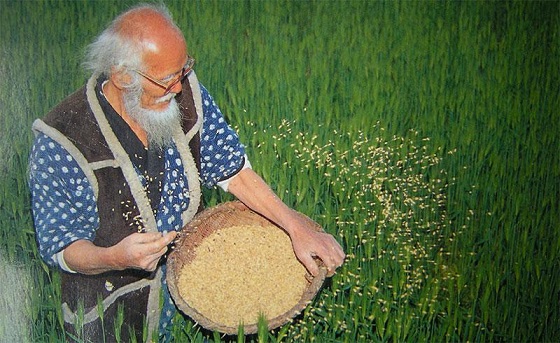
Masanobu Fukuoka
Bookshelf
Some of the most celebrated scientific ideas and books of the 20th century may not be useful for us in this century, while lesser-known works of the past acquire new relevance. Here, then, is a selection of such works, along with an invitation for readers to critique and contribute their own suggestions to this list….
Read More about The heritage of 20th century science for the 21st century: A list and an invitation
Conserve/Resist
From Down to Earth: Kathalekan, in Uttara Kannada district of Karnataka, is a relic forest with Myristica swamp ecosystem. It has remained unchanged for over 100 million years. It’s spread across an area of 25 square kilometres. Today this ancient forest is under severe threat from human interventions in the region, including a proposed highway….
Read More about Will India lose one of its last patches of Jurassic forest?